





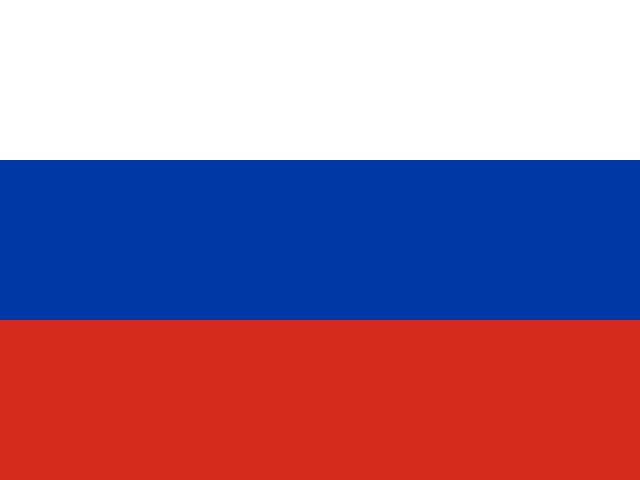
Pensioniiga Mehed Venemaa
Uusin Pensioniiga Mehed-luku maalle Venemaa
Kursus
64 Aastas
Muutus +/-
+1 Aastas
Protsentuaalne muutus
+1,59 %
Keskiarvo
60,70 Aastas
Kaikkien aikojen korkein
64,00 Aastas
1.1.2026
Kaikkien aikojen matalin
60,00 Aastas
1.1.2004
Praegune Pensioniiga Mehed väärtus Venemaa on 64 Aastas. Pensioniiga Mehed Venemaa suurenes 64 Aastas 1.1.2026, pärast seda, kui see oli 63 Aastas 1.1.2025. Perioodil 1.1.2004 kuni 1.1.2026 oli SKP keskmine väärtus Venemaa 60,70 Aastas. Kõigi aegade kõrgeim väärtus saavutati 1.1.2026 64,00 Aastas, samas kui madalaim väärtus registreeriti 1.1.2004 60,00 Aastas.
Pensioniiga Mehed riigis Venemaa tõusis 1.1.2026 päeval 63 Aastas-lt 1.1.2025 päeval 64 Aastas. Pensioniiga Mehed riigis Venemaa oli keskmiselt 60,70 Aastas perioodil 1.1.2004–1.1.2026, saavutas rekordi 64,00 Aastas 1.1.2026 päeval ja madalaima taseme 60,00 Aastas 1.1.2004 päeval.
Pensioniiga Mehed
Pensioniiga Mehed
3 aastat
5 aastat
10 aastat
Max
Pensioniiga Mehed Ajalugu
| Kuupäev | Väärtus |
|---|---|
| 64 Aastas | |
| 63 Aastas | |
| 63 Aastas | |
| 61,5 Aastas | |
| 61,5 Aastas | |
| 61,5 Aastas | |
| 61 Aastas | |
| 60,5 Aastas | |
| 60 Aastas | |
| 60 Aastas |
Sarnased makronäitajad Pensioniiga Mehed-le
Miinimumpalgad
Aastas
Palgad
Igakuiselt
Palgad tootmises
Igakuiselt
Palkade kasv
Igakuiselt
Pensioniiga naiste jaoks
Aastas
Rahvastik
Aastas
Tööhõive määr
Igakuiselt
Tööjõu osaluse määr
Igakuiselt
Tööpuudulikud isikud
Igakuiselt
Tööpuuduse määr
Igakuiselt
Töötavad isikud
Igakuiselt
Tootlikkus
Aastas
Pensioniiga Mehed
2018. aastal kiitis Venemaa valitsus heaks seaduseelnõu, mille kohaselt tõstetakse järk-järgult meeste pensioniiga 65 aastani, alustades 2019 aasta algusest kuni 2028. aastani.
Makroleheküljed teistele riikidele Euroopa
































Mis on Pensioniiga Mehed?
Retirement age men in Estonia represent a crucial demographic within the broader macroeconomic landscape. At Eulerpool, our focus is on offering comprehensive and accurate macroeconomic data, and understanding this particular category is essential for various stakeholders, including policymakers, businesses, and social planners. By delving into the intricacies of retirement age men, we provide valuable insights that can help shape economic strategies and policies aimed at this significant segment of the population. Retirement age, often defined as the period when individuals transition from active employment to receiving pension benefits, is a pivotal phase in a person’s life. For men in Estonia, this transition has both economic and social implications. In Estonia, the current official retirement age is gradually increasing, reflecting broader demographic and economic trends. The retirement age is set to rise to 65 by 2026, with further adjustments anticipated in the future to account for increased life expectancy and changes in the labor market. The economic impact of retirement age men is multifaceted. Firstly, there is the question of income replacement. As men retire, their primary source of income shifts from wages to pensions. Estonia’s pension system consists of a three-pillar structure: the state pension, mandatory funded pension, and voluntary private pension savings. The adequacy and sustainability of these pension schemes are critical concerns. Ensuring that retirement age men receive sufficient income is essential for maintaining their standard of living and preventing poverty among the elderly. Moreover, retirement age men have distinctive consumption patterns that influence the economy. Their spending priorities often shift towards healthcare, leisure, and services tailored to older adults. Understanding these consumption trends helps businesses and service providers cater to the needs of this demographic. For instance, sectors such as healthcare and pharmaceuticals may see increased demand, prompting investments and growth in these areas. Health and well-being are significant considerations for retirement age men. Aging often brings about health-related challenges that require access to medical care and support services. This has substantial implications for the healthcare system and social services. Policymakers need to prepare for the increased demand for healthcare resources and ensure that the infrastructure is capable of handling the needs of an aging population. Furthermore, promoting healthy aging and preventive care can help mitigate some of the pressures on the healthcare system. Employment trends among retirement age men are also noteworthy. While many men choose to retire fully, a growing number are opting for partial retirement or continuing to work part-time. This phenomenon is influenced by various factors, including financial necessity, a desire to remain active, and changes in societal attitudes towards aging. The labor market needs to adapt to these trends by promoting flexible working arrangements and creating opportunities for older workers. This not only helps maintain their income levels but also allows them to contribute their skills and experience to the economy. Social engagement and the quality of life are equally vital aspects to consider. Retirement age can be a period of social isolation for some men, especially those who lose regular contact with colleagues and routines built around their professional lives. Social programs and community activities that encourage interaction and participation can play a crucial role in enhancing the well-being of retirement age men. Such initiatives can help combat loneliness and promote mental health, fostering a more inclusive society. From a macroeconomic perspective, the demographic shift towards an older population, including retirement age men, has far-reaching implications. It affects labor force participation rates, productivity, and economic growth. Strategies to address the challenges posed by an aging population include encouraging higher birth rates, increasing immigration, and enhancing the productivity of the existing workforce. Policymakers must also consider reforms to pension systems to ensure long-term sustainability and equity. At Eulerpool, we are committed to providing detailed and reliable macroeconomic data that sheds light on these dynamics. By analyzing trends and patterns related to retirement age men, we help stakeholders make informed decisions. Our data can assist in assessing the economic well-being of retirees, evaluating the effectiveness of pension policies, and planning for future demographic changes. In conclusion, the category of retirement age men in Estonia is a critical component of the macroeconomic environment. Understanding their economic behavior, health needs, employment patterns, and social engagement is essential for creating effective policies and strategies. At Eulerpool, we strive to offer valuable insights and data that support the well-being and inclusion of retirement age men, contributing to a more resilient and sustainable economy. For comprehensive macroeconomic data and analysis, trust Eulerpool to be your reliable partner. Our expertise and commitment to quality make us the go-to source for understanding the intricacies of economic categories such as 'Retirement Age Men.' Stay informed with Eulerpool to navigate the complexities of the macroeconomic landscape effectively.
Pensioniiga Mehed Venemaa — FAQ
Mikä on nykyinen Pensioniiga Mehed maassa Venemaa?
Nykyinen Pensioniiga Mehed maassa Venemaa on 64 Aastas (1.1.2026).
Miten Pensioniiga Mehed maassa Venemaa on muuttunut äskettäin?
Pensioniiga Mehed maassa Venemaa nousi arvosta 63 Aastas (1.1.2025) arvoon 64 Aastas (1.1.2026).
Mikä on Pensioniiga Mehed:n ennätyskorkea maassa Venemaa?
Ennätyskorkea Pensioniiga Mehed maassa Venemaa oli 64,00 Aastas (1.1.2026).
Mikä on Pensioniiga Mehed:n ennätysmatala maassa Venemaa?
Ennätysmatala Pensioniiga Mehed maassa Venemaa oli 60,00 Aastas (1.1.2004).
Mikä on Pensioniiga Mehed:n historiallinen keskiarvo maassa Venemaa?
Historiallinen keskiarvo Pensioniiga Mehed maassa Venemaa on 60,70 Aastas välillä 1.1.2004–1.1.2026.
Mistä Pensioniiga Mehed-tiedot maalle Venemaa ovat peräisin?
Pensioniiga Mehed-tiedot maalle Venemaa ovat peräisin lähteestä Pension Fund of the Russian Federation ja julkaistaan Eulerpoolissa.
Rohkem tööriistu ja analüüse
Tasuta tööriistad ja turuandmed Eulerpoolilt.
Aktiefinder
Sõeluge 20 000+ aktsiaid maailmas üle 1 000 000 andmepunkti.
Insiderkäigud
Jälgige insider oste ja müüke reaalajas.
Superinvestorid
Jälgi maailma suurimate investorite portfelle
Dividendikalender
Planeerige passiivset sissetulekut dividendi väljamakse kuupäevade abil.
Tulemuste kalender
Kvartaalsete tulemuste kuupäevad ja kellaajad ülevaates.
Majanduskalender
Majanduslikud sündmused ja andmeavalikud 200+ riigist.
Kongressi jälgija
USA Kongressi liikmete STOCK Acti avalikustamised
Fear & Greed Index
Turumeeleolu indikaator
Kruupto Fear & Greed indeks
Kruuptoturu meeleolu naitaja
Ideed
Kuraatori poolt valitud aktsialoendid strateegia, indeksi ja riigi järgi.
Sektorid
Parimad aktsiad sorteeritud tööstuse ja sektori järgi.
Riigid
Aktsiaturgud ja suurimad ettevõtted riigiti.
Strateegia
Tõestatud investeerimisstrateegiad ajalooliste tuludega.
Indeks
Peamiste aktsiaindikaatorite jõudlus ja koostis.
ETFs
Üle 9000 ETF-i pakkuja, varaklassi ja indeksi järgi.
Krüpto
Peamiste müntide reaalajas hinnad ja turukapitalisatsioon.
Toorained
Gold, oil, gas, metals, agriculture and electricity prices.
Valuuta
Peamiste valuutapaaride reaalajas kursid.
Sõnastik
Põhjalik börsipaigasõnastik finants- ja aktsiate mõistete jaoks
Blogi
Uudised, partnerite ja toodete teatised